The Johnson County Court plays a central role in helping residents resolve legal matters fairly and promptly. It handles a wide range of cases, giving the community a dependable place to address disputes, request legal support, or respond to legal matters. Many residents turn to this court because it provides consistent services and clear procedures that keep the justice process steady and accessible.
The court manages several case types, including civil, criminal, family, probate, traffic, and juvenile matters. Each area follows set rules that help cases move smoothly. You can use this site to reach important sections such as the District Court, Clerk of Court, Family Court, and the Records Search page. These areas help you learn how the court works and where to find the information you need.
How to Search Johnson County Court Records Online
The Johnson County online portal provides quick access to public case summaries and filings. Follow these steps for a smooth search experience.
Step to Instructions
- Visit the official Johnson County online case search portal.
- Select the case category (criminal, civil, traffic, probate, or family).
- Enter full name, case number, or citation number.
- Apply filters like date range or case type if needed.
- Browse the search results and select the correct case.
- Open the case summary to view filings, parties, hearings, and status updates.
- Download available documents when allowed.
This process helps users quickly find information without needing assistance from the clerk.
Search Requirements
- A full name, citation number, or case number produces the most accurate results.
- Partial information may return multiple matches.
- Older cases may not appear online if they predate digital records.
Response Times
- Search results load instantly.
- Document downloads may take a few seconds depending on file size and system traffic.
Record Access Rights
Only publicly accessible information appears in online searches. Restricted or confidential data includes:
- Juvenile cases
- Sealed records
- Adoption files
- Sensitive financial information
- Certain protective order details
Access to restricted cases may require court approval or a formal request through the clerk.
Types of Court Records Available
Johnson County manages several major record categories. Each one serves different legal needs and may show different details in search results.
Criminal Records
Criminal records include misdemeanor and felony cases. They may display:
- Defendant information
- Case numbers
- Charges filed
- Arrest dates
- Court hearings
- Sentencing notes
- Case status updates
Civil Case Files
Civil records involve disputes between private parties. These files may include:
- Money claims
- Contract disputes
- Property conflicts
- Small claims
- Protective order filings
Family & Divorce Files
Family court records cover personal matters such as:
- Divorce filings
- Custody agreements
- Child support hearings
- Modification motions
- Parenting plans
Probate Files
Probate files cover estates and guardianships, including:
- Wills
- Asset inventories
- Executor appointments
- Guardianship requests
- Estate distributions
Juvenile Files
Juvenile cases involve minors and are usually closed to the public. Only authorized parties — such as parents or legal guardians — may view these files. Most juvenile cases do not appear online.
Johnson County Court Directory
The Johnson County Court Directory gives visitors a clear way to find the right courthouse and office for their situation. This section highlights the main locations, contact details, and the type of cases each division handles. The goal is simple: help people get to the right place without confusion.
Main Courthouse
The main courthouse serves as the central point for many county services. It covers case filings, general inquiries, record requests, and scheduled hearings. Many visitors start here because staff can point them to the correct division if they are unsure where their case fits.
District Court
The district court handles a wide range of cases, including civil disputes, criminal matters, and appeals from lower courts. Visitors often come here for arraignments, hearings, and document filings related to higher-level cases.
Family Court
Family-related matters move through this court. These include divorce filings, child custody actions, guardianship cases, visitation issues, and legal separation paperwork. Staff support visitors who need forms or help locating scheduled hearings.
Juvenile Court
This courthouse focuses on youth-related cases. Matters often include truancy hearings, juvenile offenses, and child welfare issues. The setting is structured to keep young people and their families informed and supported during legal steps.
Traffic Court
Traffic citations, license issues, and minor driving offenses are handled here. Many people visit this court for fine payments, hearing dates, and information about traffic school or compliance requirements.
Probate Court
Probate services support matters involving wills, estates, and property transfers. Visitors come here for estate filings, conservatorship questions, and legal paperwork connected to family assets.
Administrative Offices
These offices manage the internal operations of Johnson County Court. People often reach out for appointments, fee schedules, employment inquiries, and public information requests.
Map Section
An interactive map works best in this section to help users locate each courthouse with ease. The map can highlight all Johnson County court buildings, show parking options, nearby transportation routes, and provide directions with a simple click. This tool supports visitors who prefer a visual way to find the correct location.
Johnson County Court Services
The Johnson County Court Services section gives residents a clear path to the help they need. The primary focus keyword Johnson County Court Services is used naturally, and the content stays practical, simple, and helpful. Each service area below explains what users can expect, what they may need to prepare, and where they can find more support.
Civil Court Services
Civil Court Services cover lawsuits, disputes, and small claims filed within Johnson County. These matters often involve money, property disagreements, or contract issues. Users can open a new case by submitting the required forms and paying the filing fee. Each case type may request different documents, so reviewing the instructions before filing saves time and reduces mistakes. Small claims offer a simpler process with lower fees, making it easier for people to resolve minor disputes without a long process.
Criminal Court Services
Criminal Court Services handle misdemeanor and felony cases from the first hearing through trial. Each case begins with an initial appearance where charges are read. As the case moves forward, users may attend hearings, review motions, or track next court dates.
For anyone who wants to look up a past or current case, criminal case information is available through the public access system. This allows users to view charges, court dates, and case progress.
Traffic Court Services
Traffic Court Services deal with speeding tickets, moving violations, and other roadway-related issues. Users can pay a ticket online, by mail, or in person depending on the citation. Some violations require a court appearance, especially if the citation involves injury, excessive speed, or past violations.
Before attending court, users should bring their ticket, ID, and any documents related to insurance or repairs. Clear instructions help residents decide whether they can pay the fine or need to appear.
Juvenile Court Services
Juvenile Court Services cover cases involving minors, including status offenses, delinquency matters, and supervision hearings. Because these cases involve youth, the court follows strict confidentiality rules. Only parents, guardians, legal representatives, and authorized agencies can access the files.
The goal is to support young people while keeping their personal information private, giving families a structured process that protects everyone involved.
Family Court Services
Family Court Services address life events that affect households, including divorce, child custody, and child support. Users can file for divorce, open a custody case, or request support modifications. Each case type may need financial forms, parenting plans, or service documents.
The court provides a clear path for parents who want to update support orders or adjust custody schedules. Internal guidance helps families stay organized during an emotional time.
Probate Court Services
Probate Court Services cover wills, estates, guardianship, and related matters. Families turn to this court when a loved one passes away or when an adult or child needs a legal guardian. Each probate case may involve estate inventories, letters of administration, or medical statements for guardianship requests.
This service area helps residents handle important end-of-life or care-related responsibilities with clear steps and required documentation.
Certified Copies vs. Public Copies
Many users are unsure about which type of document they need. The differences below help clarify what each option provides.
Public Copies
Public copies are easy to access online. These copies help users confirm case numbers, view scheduling updates, and read basic filings. They work well for general reference, background checks, or simple case monitoring.
Public copies do not carry legal authenticity for formal matters.
Certified Copies
Certified copies include an official stamp or seal from the clerk. These copies are legally recognized for matters such as:
- Immigration filings
- Adoption cases
- Name changes
- Property disputes
- Social Security or tax-related requests
- Court appeals
Certified copies require a request submitted to the clerk in person or through mail. Some courts may offer online submission, but pickup still takes extra time.
Public online documents rarely qualify as certified copies.
Costs, Fees & Turnaround Times
Users planning to request documents or certified copies often want clear expectations before making the request. The fees are usually consistent across most divisions.
Search Costs
Online searches are free. Some portals may charge a small fee to view archived filings or to download certain documents.
Copy Fees
Copy fees may be charged per page. Larger files such as probate packets or long civil filings may cost more.
Certified copies include an extra certification fee for the official seal. These fees help cover clerk processing time.
Turnaround Times
- Online copies: Available instantly
- Standard copy requests: One to three business days
- Certified copies: One to five business days depending on request volume
- Archived records: May require more time if stored off-site
Court Calendars, Case Status & Dockets
This section helps users check Johnson County Court dockets, find upcoming hearing dates, and review case status details in a clear and simple way. The primary focus keyword “Johnson County Court dockets” is used naturally to support strong visibility while keeping the content helpful and easy to read.
How to Check Johnson County Court Dockets
Checking Johnson County Court dockets gives you quick access to hearing dates, recent case activity, and updates entered by the court. Most users begin with the online search page because it’s the fastest way to locate case details.
Search by Case Number
- Best choice if you already have official court papers.
- Goes directly to the correct case file.
- Avoids sorting through multiple results.
Search by Name
- Use this option when you do not have a case number.
- Enter the full legal name exactly as it appears on records.
- Try name variations if no match appears.
- Apply filters such as civil, traffic, or criminal to narrow the results.
If the Page Isn’t Loading
- Refresh and try again later—updates can temporarily slow the site.
- Switching to a different device or browser often resolves errors.
Upcoming Court Dates & Scheduling
Users often check dockets to keep track of upcoming hearings and avoid missing required appearances. Johnson County provides these schedules through its online calendar and mailed notices, depending on the case.
Checking the Online Court Calendar
- Shows hearing dates, courtroom assignments, judge names, and case categories.
- Updates frequently, so check back if nothing shows for your case.
- Some versions highlight recent schedule changes.
Verifying an Existing Court Date
- Use the case status lookup tool to confirm if your date has changed.
- Enter your case number or full name for the most recent update.
- Dates may shift due to weather issues, judge schedules, or docket overload.
When You Need Final Confirmation
Keep your case number ready to speed up assistance.
Contact the clerk’s office during business hours.
Filing Procedures & Case Requests
Filing a case in Johnson County Court follows a clear process, and each case type requires different steps. The goal here is to help visitors move through each stage with confidence and know exactly where to start.
Civil Filings: Civil cases usually involve disputes such as property issues, contract disagreements, or small claims. You begin by completing the correct petition form, attaching any supporting documents, and submitting the filing fee at the clerk’s office or through the approved online portal. Many users appreciate preparing their documents in advance, so having everything ready will help the process move faster.
Criminal Filings: Criminal filings are typically initiated by law enforcement or the prosecutor’s office. If you are submitting a related request—such as a motion, appeal notice, or record request—you must use the court’s approved forms and file them with the clerk. These filings often require strict deadlines, so double-check your timeline before submitting.
Family Filings: Family cases include divorce, custody, child support, and legal separation. Start by completing the correct packet for your situation. The court may require financial affidavits, parenting forms, or service documents. Many residents find it helpful to gather identification, financial records, and prior court orders before filing.
Probate Filings: Probate filings relate to estates, guardianships, and wills. These cases often need detailed paperwork, such as death certificates, inventories, or appointment requests. Submitting complete and accurate forms helps the court review your case more quickly.
Required Documents for Each Case Type
Each case type comes with its own paperwork, and having the right forms ready saves time during your filing. Most cases require an initial petition, identification, and any supporting records that explain your request. Family and probate cases may require extra financial or personal documents.
Johnson County Legal Resources
Johnson County Legal Resources give residents clear paths to get help with common court issues. These tools support people who want to prepare forms, look for legal support, or check information related to arrests and bonds. Each part below highlights what users often search for and answers concerns in simple terms.
Self-Help
Self-help tools make it easier for people to manage basic legal tasks on their own. These resources offer step-by-step support so users feel more confident during the filing process.
Filing assistance
Many residents want help completing forms for civil, family, or small claims cases. Local court self-help centers offer form packets and explain how to submit them correctly. These centers do not give legal advice but offer clear instructions that reduce common mistakes.
Mediation
Mediation gives both sides a chance to resolve disagreements without a full court hearing. A trained neutral party helps both people discuss the issue and explore fair solutions. This option often works well for family matters, property disputes, and minor civil issues.
Legal aid organizations
Several legal aid groups support people with limited income. These groups help with issues such as housing, family cases, protection orders, and consumer problems. Each program has its own income rules and case limits, so users should check eligibility before applying.
Attorney & Public Defender Information
Sometimes a case needs professional legal support. Johnson County offers several paths for people who want to hire an attorney or request a public defender.
Where to find attorneys: Local attorney directories list lawyers who handle family law, criminal defense, probate, real estate, and more. Many offer an initial consultation to help users understand their legal options. County bar associations often keep updated lists of active lawyers.
Public defense requirements: People who cannot afford an attorney in a criminal case may request a public defender. The court will ask for income information to confirm eligibility. If approved, the public defender represents the person throughout the case, including hearings, motions, and negotiations.
Bonds, Warrants & Arrest Search
Many users look for information related to arrests. Johnson County provides clear steps to help people understand what these records mean and how they are used.
How arrest records work: Arrest information usually covers the date of arrest, charges at the time, and booking details. These records do not confirm guilt. They simply show that law enforcement detained a person.
Difference between arrest and conviction: An arrest happens when someone is taken into custody. A conviction happens only after a court finds the person guilty or the person accepts responsibility through a plea. This difference matters because an arrest does not prove wrongdoing. A conviction appears after the court process ends.
Johnson County Court History & Locations
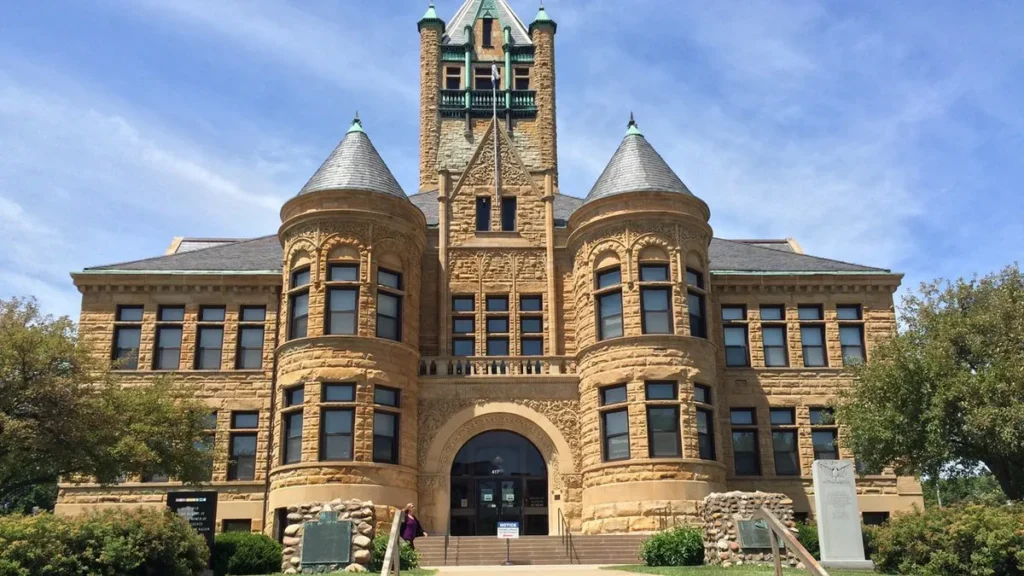
Most court proceedings in Johnson County take place at the Johnson County Courthouse in Kansas City, Kansas. The county’s judicial infrastructure has evolved significantly over the past century and a half. The first courthouse was housed inside a government building constructed in 1859. As the community grew, Johnson County built its first dedicated courthouse, opening its doors in 1892.
That structure was later replaced in 1952, followed by major expansions: an additional wing in 1954, another in 1968, and eventually an 8-story tower that supported growing administrative and judicial needs.
To meet modern standards of safety, technology, and accessibility, the county designed and built a fourth courthouse, which officially opened in 2021—a modern hub for district court operations.
Johnson County District Court
Johnson County Courthouse
150 W Santa Fe St.
Olathe, KS 66061-3273
Phone: 913-715-3500
Municipal Courts in Johnson County
Municipal Courts in Johnson County handle city-level cases such as traffic violations, local ordinance issues, and misdemeanor matters. Each city operates its own municipal court, providing residents with accessible locations and streamlined services for resolving minor legal issues. These courts focus on efficient case processing, community compliance, and ensuring that local laws are upheld. Together, they form an essential part of the county’s overall judicial system.
Overland Park Municipal Court
12400 Foster St.
Overland Park, KS 66213
Phone: 913-327-6800
Kansas City Municipal Court
City Hall
701 N 7th St, 2nd Floor
Kansas City, KS 66101
Phone: 913-573-5200
Olathe Municipal Court
1200 S. Harrison St.
Olathe, KS 66061
Phone: 913-971-6393
Shawnee Municipal Court
5860 Renner Road
Shawnee, KS 66217
Phone: 913-742-6003
U.S. District Court – District of Kansas
Kansas City Division
Robert J. Dole Courthouse
500 State Ave, Room 259
Kansas City, KS 66101
Phone: 913-735-2200
Clerk of the District Court
The Clerk of the District Court serves as the official custodian for most court records in Johnson County. The Clerk’s office manages jury services, issues subpoenas, maintains case files, attends court proceedings, and processes court-related fines and fees.
Jennifer Leach
Clerk of the District Court
Johnson County Courthouse
150 W Santa Fe St.
Olathe, KS 66061-3273
Phone: 913-715-3500
Frequently Asked Questions
This section answers the most common questions people ask while looking for Johnson County court records. Each answer is written to give quick clarity and help visitors move forward without confusion.
Are Johnson County court records public?
Most Johnson County court records are open to the public. Anyone can view basic details for civil, traffic, family, and criminal cases unless a judge has restricted access. Some information may be limited for privacy reasons, but the general case summary is usually visible through the court’s online search tools or by requesting records in person.
How do I search divorce records?
Divorce records are stored with the family court division. You can look up basic case information through the online court search by entering names or case numbers. Full documents might require a request through the Clerk of Court. Photo ID and a small copy fee are often part of the process. Certified copies are usually only issued to the people involved in the case.
Where do I find traffic case information?
Traffic cases are listed in the court’s public search system. You can look up pending tickets, past violations, and court dates by entering your citation number or name. If you need payment options or details about a required appearance, the traffic division page offers step-by-step instructions.
How do I contact the Clerk of Court?
The Clerk of Court is the main point of contact for record requests, case updates, and document copies. You can reach the office by phone, visit during business hours, or use the email form provided on the official court website. For faster service, have your case number ready before reaching out.
What is the fastest way to find case documents?
Most users get the quickest results through the online search tool. It lets you review summaries, upcoming hearings, and available documents without waiting in line. If you need certified copies or sealed-case confirmation, you will need to contact the Clerk of Court directly.
Are juvenile cases public?
Juvenile cases are private. These records are hidden from public search results to protect the minor’s privacy. Only parents, legal guardians, attorneys, or people with a court order can request access. Case summaries, filings, and hearing dates are not posted publicly.